Author: Krishna

  • Will I run out?

    Will I run out?

    Of ideas. Of inspiration. The sheer will to put in the seemingly tiny amount of work to put words on the page.

    These are the things that worry me. Perhaps they worry you too. 

    I am astonished when I hear that authors wrote multiple books that never got published. The mind boggles to think that they must have written 40,000-80,000 words, then created multiple drafts based on feedback for each book. That doesn’t even take into account the time they spent identifying literary agents and writing proposals.

    How do they come up with so many plots and think of so many characters? Even if the novel is not quite up to the mark, I would find it extremely difficult to create so many storylines. Which, of course, worries me whether I am being a fool even to attempt such a goal. 

    I had the same fears when I started this blog. How many writers have attempted to do this and failed? I know of at least one. Me. I have failed countless times to start a blog. Why should this time be different? 

    The honest answer is, ‘I don’t know.’ But I can tell you I have a different approach this time around. I think this approach will work. At least I want it to work. And my fears regarding ideas? Well, the more I write, build a bank of posts, the more I think about writing, the more I get new ideas. 

    All this is a roundabout way of saying that your mind is an ideas machine. So lead your life, read books, listen to music, watch films. And then show up with a pen in your hand (or the keyboard under your fingertips) and watch it churn out some utter shit, but also a few gems.

  • What the frog – in which I name a frog

    What the frog – in which I name a frog

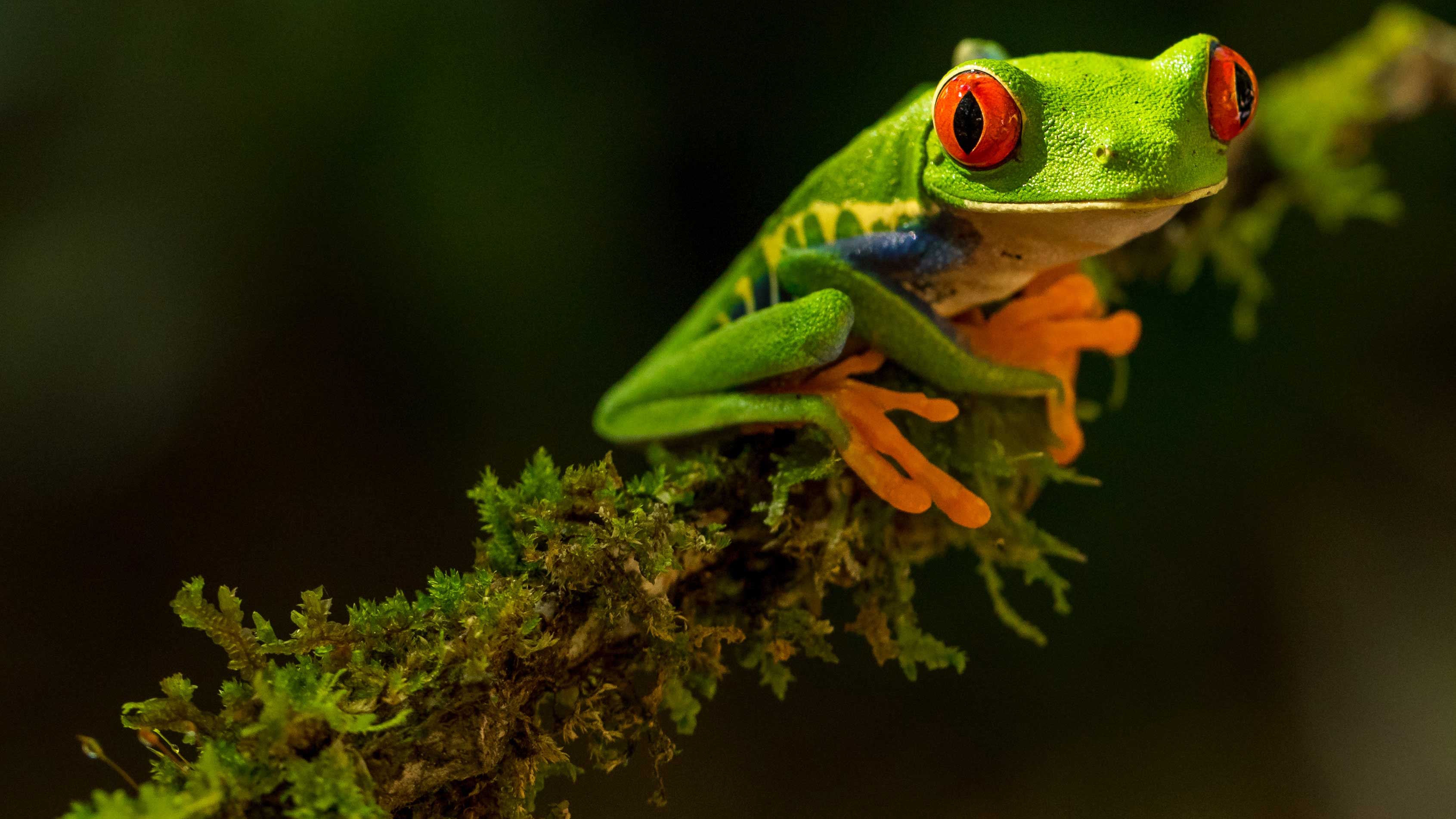
    One of the fun-nest productivity techniques I have come across is called ‘Eat the Frog’, which takes off from a quote that’s often attributed to Mark Twain.

    “Eat a live frog first thing in the morning, and nothing worse will happen to you the rest of the day.”

    (Note: This does sound like something Mark Twain would say. But I haven’t found any mention of where he said or wrote this.)

    Eating a live frog is perhaps one of the most disgusting things you can do. (Unless, of course, you are a snake, and you find frogs delicious. But then again, you also eat rats. So, forgive me if I don’t take tips on fine dining from you.) Anyway, according to ‘Eat the Frog’, you do the thing that feels as disgusting or difficult as eating a frog as soon as you can in the day.

    The question, of course, is what is the frog in your life.

    The frog might take many different shapes: Going a daily run, attending a class that’ll level up your skills, setting up a meditation practice, or ploughing your way through the first draft of your novel.

    So, you take this action every day as soon as possible – preferably first thing in the morning.

    But here’s the thing – going on a run is not difficult. Nor is typing words on the keyboard or attending an online class. In other words, the act of running or meditating or writing is not the frog.

    The frog is a different beast altogether. In my sightings, the frog takes the form of an icky, sludgy reluctance to do the things that you swore were important to you.

    In his book The War of Art, Steven Pressfield calls it ‘The Resistance’. 

    It’s not the writing part that’s hard. What’s hard is sitting down to write. What keeps us from sitting down is Resistance.

    The artist Matthew Inman (The Oatmeal) gives it a more eloquent name, ‘The Blerch‘. 

    The Blerch represents all forms of gluttony, apathy, and indifference that plague my life. 

    I have named the frog Ick-a-lot. I have also knighted him because he has won countless battles with Reason and Better Sense. So my frog is Sir Ick-a-lot.

    Why am I spending so many words naming the frog?

    1. It’s cool to name things – especially frogs.
    2. Just as it is essential to clarify what is truly important to me, I believe it is essential to clearly identify what is holding me back from doing what I have deemed important to me. 

    Okay, so now I have named the frog and redefined what it is. What next? 

    Initially, I thought, “Well, now that I have identified the enemy, I need to quell it – that is, prevent it from existing – before doing all the things that are important to me.”

    That strategy failed spectacularly. Turns out the expectation that I will one day defeat the frog and then never have to feel its icky sludgy-ness IS the frog.

    The trick is to understand that the frog is a part of you forever. Importantly, you can do the things that are important to you despite this.

    • I accept that it will suck to put in the work sometimes.
      (Do the work even if you don’t feel like it.)
    • I accept that the results will not meet my lofty standards.
      (Measure effort, not results.)
    • I accept that I will fail along the way.
      (Forgive yourself when you slip up and be ready for battle the next day.)

    This approach is allowing me to push along and move forward. It turns out Sir Ick-a-lot is not my friend. But I don’t have to make him my enemy either.

  • The simplest thing you can do

    The simplest thing you can do

    I was frozen with anxiety. This was strange because the decision I had to make was not life-changing or binding. I just had to choose a newsletter service. I wasn’t going to pay any money for it – not immediately any way – and switching to some other service would have been fairly easy. But one part of my mind – the dude in charge of the panic button – would tell you a different story. He acted like my life depended on it. As though the decision I took would change my life irreversibly. As though my success as a blogger would depend entirely on whether I got this decision right. 

    I was mindful enough to know panic dude had gone off into a spiral. The realisation did not immediately help break the cycle of thought and emotion. But it gave me enough space to ask, “Where is the danger?” This is a question I often ask to break out of anxiety. Because usually – though not always – there is no danger. 

    I asked myself what I could do in this moment to move. Just a little bit. Let it be imperfect. Just move.

    Here was the answer: Do the simplest thing even if it is a mistake. 

    It worked. I signed up for an email service, played around with its settings on WordPress, and my newsletter was ready to get published.

    Why did this approach work? First, I allowed myself to make a mistake. In other words, I gave myself the permission to learn by taking action. Second, by committing to doing the simplest thing, I had made things, well, simple.

    I am not sure if I have chosen the “best” newsletter service. I am not sure if it will fulfill all my needs in the months to come. I have simply taken action. I am open to learning. Most importantly I am set to ship my work.

  • Letters from Earth #1

    Letters from Earth #1

    Dear Ximo,

    I got in last night. Yes, the flight was comfortable. And yes, I am sorry I didn’t message as soon as I landed. But I was too groggy after the awakening. I had asked the attendants to warm up the circuits as soon as we entered the solar system. But no, they had to wait until we were in the outer orbit! I felt like my brain was floating in the hot vents of Ma’rak-ba’h while descending. 

    The ship landed smoothly enough. Neornan XIBB9’s technology is primitive – as my analysis had already shown. Their sensors are blind to our Astrion net. A few birds on the planet detected our arrival straightaway. But I have been told the dominant technological specie – called humans – can’t yet communicate with them. (Like I said, primitive.) 

    Neornan XIBB9, or Earth – might as well get used to calling it by the local name – looks like a junkyard from above. Satellites strewn all around the planet. The water and air opaque with contaminants. The temperature is a couple of degrees off. 

    It’s not unlike Tronton in the early centuries following the Breakthrough. Remember, how we used to blast dead satellites with rockets? Makes me wonder if Earth has a brighter future after all. But who am I kidding. As we well know, Trontonians were lucky. Most conscious beings never evolve to be wise. I’m afraid it’ll soon be back to fungi and bacteria here on Earth.

    But that’s at least 50 years into the future. For now, I can’t wait to see these “humans” with my own eye. I know what you’re thinking. Yes, I will step out only after the Transition. I don’t think this specie is quite ready to see my Exetron wings. Although I am tempted to show them to some humans – just to freak them out :).

    xoxo
    Jim

    P.S. I miss the TwoSun

  • What’s your core skillset?

    What’s your core skillset?

    It’s easier than ever before to create and publish content. But this also brings in new demands that creators of the past seldom had to deal with. Take standup comedians. Earlier, they would have to write their sets, revise them, perform, and then revise some more. This was their core skill set. They would work their way up from ‘Open Mics’, to performing at smaller venues, then bigger venues. If they became popular enough, they could standalone shows in auditoriums, go on tours, and do corporate shows. 

    Then came YouTube. Now, standup comedians can reach millions of people relatively quickly. However, even though they’ll hire a crew, standup comedians need to have enough understanding to answer questions like, ‘3-cam setup or 4-cam?’, ‘Shoot in 4K or HD?’. Once the video is ready, they need to take calls like  ‘What thumbnail design will attract user attention?’, ‘What’s the best time to upload the video on YouTube?’, ‘What hashtags will push the views?’.

    Digital distribution channels like YouTube and Instagram are also gigantic content machines. You have to constantly feed it and do things that please their almighty algorithm that will get you organic views. You have to know what’s trending in order to ride the what’s-popular wave.

    The problem is that in the vast ocean of things-to-do-to-win-on-the-internet, it is very easy to forget what makes for good writing/music/standup set/artwork in the first place. 

    As a writer, I get better by sitting down each day and put down words on the screen. 

    I am not saying that understanding technology, knowing the trends, defining your audience, or improving production value is not important. I am simply saying that they are secondary or tertiary to your core skill set. Because nothing will work for me if I don’t produce words worth reading.

  • Too many cups of coffee

    Too many cups of coffee

    Remember the old days when a handful of websites started offering monthly subscriptions instead of having to pay bulky one-time fees? Their pitch went something like this: “The subscription costs less than a cup of coffee.”

    Spurred by the low prices and a genuine desire to support developers, I subscribed to many apps and services that I used regularly. Netflix, Spotify, Disney+Hotstar, Amazon Prime, Office 365, Adobe Creative Cloud, Todoist, Google One, iCloud, Waking Up – all made sip-sized debits from my bank account every month or year.  

    Then came the media companies. They tugged on my heartstrings (I used to work with a newspaper). ‘Save journalism,’ they said, ‘It costs less than a cup of coffee.’ I subscribed to NYT, The Hindu (nothing to do with religion, one of India’s most respected news organisations), Splainer (a cool new news service), and Wired. (The Atlantic, New Yorker, Newslaundry, The Morning Context, The Paris Review, The Economist, and many more are on my wishlist.) 

    I even became the co-founder of a children’s storytelling app, KathaKids, which charged – you guessed it – a subscription. I paid for it too – you know, for testing purposes! 

    You know where I am going with this, right? It’s 2021 and I am all hopped up on caffeine with no money in my wallet. 

    This is why a recent article on Wired’s Plaintext newsletter (requires subscription 😝) resonated with me. 

    “We are living in the age of subscriptions, where businesses now realize that having users who auto-pay every month frees them from constantly hawking piecemeal purchases,” writes Steven Levy, “Also, consumers are getting increasingly wary of internet advertising, where, as critics endlessly charge, you are the product. With subscriptions, the product is the product.”

    The US is putting together legislation to regulate subscriptions. Called the Unsubscribe Act, it will require companies to be transparent about subscriptions and make it easy to unsubscribe from the service (looking at you, NYT). Back home in India, the Reserve Bank of India has clamped down on auto-debits occurring on credit/debit cards. Users were asked to opt-in to the auto-debit feature on their debit/credit cards.

    While these measures are aimed at bringing in transparency and ease of use, the core question, according to me, is this: How many services can we really afford to subscribe to? Many subscription-based services are currently fueled by VC money. I don’t think that ALL of them can survive. There is bound to be consolidation at some stage. Bundled subscriptions are another option. However, for some reason, the concept never really took off.    

    Something’s gotta give. Because there’s only so much coffee I can drink.

    P.S. There’s also the small matter of the Creator Economy, which I did not touch upon here. That’s a whole other post!

  • Writing IS learning

    Writing IS learning

    I was a journalist for about nine years. I have been writing for non-fiction TV and digital videos for the past eight years. However, I am a novice when it comes to fiction writing.

    I have written a bunch of short stories in a burst of inspiration. I have started and abandoned a couple of novels. I am currently developing what I hope will be a comic book. Oh, and I have another grand ficitonal story building up inside my head.

    I guess two questions hold me back:

    • First, am I capable of writing a book? 
    • Second, am I really capable of writing a book?

    So, I attend workshops, read articles on websites for authors, and read books on the art of writing. I learn a lot. But there is so much more left to learn! And so, feeling fairly lost, I postponed the actual act of writing.

    Recently, an obvious truth smacked me right in the face. You know, the kind that makes you doubt the intelligence that supposedly distinguishes me from apes.

    And the truth is this: Writing IS learning. 

    Think about it. You don’t train for a marathon by reading books. Or show your kids YouTube videos and expect them to start tying shoelaces. Or cook a gourmet meal by liking a video on Instagram. Sure, reading books, watching videos, and getting inspired by chefs help – but it is only by taking action that we learn. We need to make a mess, get hurt. Pull a muscle. Fall on your face because the laces came undone. Undercook that pasta. 

    Why this didn’t occur to me earlier, I will never know. But now that it has, I am going to take a different mental posture to my fiction writing. Each day, I will sit down to write with the intention of learning to write. I’m not here to create a masterpiece. I’m here simply to learn… and to create a masterpiece 😝.

  • A gentler question

    A gentler question

    We spend a fair amount of time obsessing over right vs wrong. However, the words ‘right’ and ‘wrong’ have a binary quality. While there are many situations where this serves us and society well, there as many – if not more – situations that defy such easy categorisation. 

    Now, this is not a post on morality. Here, I wish to address the more mundane topic of decision making. How do we decide on a course of action when we are not sure if it is the right or wrong one? Or, what if we know what is the right action, but don’t feel like taking it?

    Let’s say it is 7 am on a Monday morning. You’ve just woken up. There are emails to be checked, meetings coming up, and you are reminded of the status reports to be filed by the end of the day. It occurs to you that you should take 10 minutes to meditate. But the rush, the anticipation of the hectic day to come, is distracting you. You itch to open your laptop instead.

    Let’s pause. The ‘right vs wrong’ framework serves us poorly here. There is nothing ‘wrong’ with skipping meditation. If we do, we are likely to enter a spiral of thinking – blaming ourselves for, well, wanting to do the wrong things.

    In such ‘grey’ situations, I find it is more helpful to ask a gentler question: Is this action helpful?

    Meditation is a step towards a balanced state of mind. Checking email as soon as you wake up is likely a step towards imbalance. This question reduces the emotional stakes that ‘right vs wrong’ brings with it. With the stakes lowered, I find my mind moving towards balance – and more likely to make a decision that is helpful. 

    Now, obviously, things don’t tie up neatly like a bow every time. Despite the gentler question, I may well choose the option that is unhelpful. And no, it does not make me feel good. But by lowering the stakes, I give myself a better shot at reaching and staying in a balanced state of mind. 

    A state of mind that hopefully takes more right decisions than wrong. 

    If you liked this post, you can subscribe to my weekly newsletter with the best post(s) on leading a Calm, Creative, and Curious life.

  • The river of time

    The river of time

    Hey
    Come here
    Sit
    Breathe
    Watch the chatter
    Be very very still
    Listen
    The gentle gurgle
    It’s the river of time
    Flowing by

    I’m not sure if this qualifies as poetry. Just some thoughts that occurred to me as I craved silence.

  • Ten-minute writes

    Ten-minute writes

    I recently decided to publish something every day. I took this decision after attending Akimbo’s The Creative’s Workshop. During the workshop, we published what we called ‘Dailies’. It was part of the workshop’s central teachings – creative people must publish frequently.

    It seemed like a grand plan – for about one day. Then something happened. It might have happened to you too. I call it ‘Life’.

    Deadlines of three major projects suddenly turned up in a space of a couple of days. I also had to accompany my dad for minor surgery, and stay with him during recovery. There is no way I could add blogging to the mix, right? Right?

    So, in a moment of inspiration (or desperation), I came up with the idea of 10-minute writes. I would choose simpler thoughts that could be put down on paper in just 10 minutes. Because 10 minutes of writing feels doable even on the busiest of days.

    As I type this, it’s already 12 minutes on the clock. (I like to cheat.) Because 10 is an arbitrary number. The trick is to simply open the laptop and get typing.

    • Also read: The Unit of Effort
      A post in which I talk about why I use ‘time spent’ as a measure of progress for my more ambitious and long-term creative projects.