This time of year we look back – and forward. We make new plans. Give ourselves the permission to renew broken promises. It feels good because the world has slowed down. You can breathe easy.
And this is by no means bad. It’s great to have a vision, to imagine what you, your achievements, and life will look like this time next year.
But once the vision is made, it’s time to shift your attention. From far out to right now. Not this month. Not this week. Right now.
Here, you are taking actions. Here, you are facing your limitations. Here, you are experiencing defeat, triumphs, and, most of the time, just your plain old boring, precious life.
The day’s not over (probably). Neither is the year. Breathe in. It’s time to work. Today.
Irrational beliefs can be used for terrible things – to start religious wars, vote dictators to power, or sell billions of the “edible food like substance” we call McDonald’s burgers.
But they can also be used to do wonderful things.
Take my irrational belief. I believe that I will write a book one day, in the near future, soon.
How do I know this? I don’t. Can I give you a logical argument why this is likely to happen? I can’t.
For a few years now logic has held me back. How do you do a thing you have never done before?
And then there are babies. Babies don’t operate as per adult logic. They take flights of beliefs – an irrational faith that their legs can hold them up when they can’t. And it is the very act of failure that builds the muscles that transforms them – from crawling monsters to erect maniacs.
And so, I have decided to be a maniac in this micro area of my life.
It gives me a reason to sit in front of the laptop trying to flesh out a character’s motivation or the next scene when I really have no rational reason to.
My irrational belief is that if I sit front of the laptop and stare at the blank screen for long enough, my mind will conjure up a semblance of a passable solution – and, on the rare occasion, dazzle me with brilliance.
So, that’s my irrational belief for the next year.
The aroma of freshly baked bread – or a delicate bite of one – is heaven on Earth.
Bread can be made with just four ingredients – flour, water, a little yeast, and a pinch of salt. That’s it.
I was reminded of this last night when I visited Marine Drive in South Mumbai. It’s a graceful arc of a road abutting the Arabian Sea. It was the night before New Year’s and the embankment was chockfull of people. Thousands sat with their backs to the road and faces to the sea.
“I have never understood the point of it,” a friend noted. I nodded. I hate crowds and though I love the sea, I am not a big fan of Marine Drive. We walked for 10 minutes. A space opened up on the embankment as a large group got up and left. Our little group filled the space happily.
We turned our backs to the road and our faces to the sea.
A steady cool sea breeze fanned us. The traffic sounds faded. Our eyes took in the sea, breathing in the salty air. To our right, Marine Drive disappeared into the horizon. Despite the crowd, it felt like the whole wide sea had opened up just for me.
I recognised the feeling. Just four ingredients. The Arabian Sea, a glittering road, our little group of close friends, and a pinch of salt.
If your opinion about a work of art changes after you find out which tools were used to make it, or who the artist is or what they’ve done, you’re no longer judging the art. You’re making a choice not to form your opinion based on the work itself, but rather on something else.
And then further:
If an image, a song, a poem, or video evokes affection in your heart, and then that affection dissipates when you learn what tools were used to create it, that’s not a test of the work of art itself. To me it’s no different than losing affection for a movie only upon learning that special effects were created digitally, not practically. Or whether a movie was shot using digital cameras or on film. Or whether a novel was written using a computer or with pen and paper.
I have two observations to make here.
First, I think Gruber misinterprets what Inman means by the term “AI Art.”
The way I see it, Inman is ranting against “art” generated purely by typing a few lines of prompt and choosing the prettiest option the AI throws up. When art is created using this process, then the AI is not being used as a tool at all!
Second, I don’t think the art is separate from the artist or the process used to make it. Separating it, commoditizes art and is what most tech products seek to do.
Suppose you walk into an art gallery and admire a piece of art on display. Would you value it more – emotionally, first, and then by how much you are willing to pay for it – if you knew that the artist took, say, six months to think through the work and made deliberate choices, large and small, to arrive at the final piece of work as opposed to writing five lines of prompt and put up whatever an AI tool churned out without modifying it even a little bit?
Let’s take another example. Suppose you come across a beautifully designed pair of expensive shoes. Then you learn it is made by a sweatshop in Bangladesh – all legitimately, without breaking any local laws. Does that change how you feel about the shoes?
I believe that the story behind what we create matters. That’s how we become fans of artists or why a Banksky is cherished far more than generic work of graffiti.
But I agree with Gruber that we shouldn’t judge people based on the tools they use. But the key term here is “tools.” Inram too has no issues with people using AI as a tool of art.
When you use AI as a tool, it’s akin to using Lightroom to process your digital photos as opposed to developing a photo film. It doesn’t reduce effort as much as it enhances it or allows you to work with entirely new mediums. And here too I agree with Gruber when he says, “Good art is being made with AI tools, though, and more — much more — is coming.”
Over at Substack Andy Williams shared this beautiful piece of stop-motion animation by the artist Victor Haegelin, for a short film called An Urban Allegory, directed by Alice Rohrwacher, and street artist JR.
And this is what he had to say about it: “This is a stop-motion animation. It must have taken the creators hours and hours to meticulously and laboriously produce this animated street art. Why didn’t they just use AI? You know why, it would have been cheating. Show your workings, as your old school teacher told you.”
While Andy is alluding to the ethical debate around the use of AI (one we certainly need to have), his post got me thinking about how AI is viewed in the creative workflow.
In my experience, there are three broad aspects to most creative projects and the writers/artists/directors who work on them.
Developing a taste
Conceptualisation or imagination
Execution
Taste is the most under appreciated aspect of any creative product. It develops over several years and is the accumulation and slow composting of life experience and the art forms you expose yourself to.
The conceptualisation of a creative project emerges from the marriage: (A desire to make some sort of impact) x (the artist’s tastes).
And finally there’s the execution. That is putting the brush to canvas, hands on the guitar, fingers on the keyboard – you get the idea.
Now, where does or can AI come into all of this?
I think the use of AI in creative projects falls somewhere on a scale. On one end, AI is used purely as a tool, and on the other it is used as an artist – in other words to replace the artist.
For instance, using AI, Photoshop can select subjects or remove objects in a photo on the click of a button. That’s using AI as a tool. But when you use Adobe Firefly or Midjourney to generate an illustration you are replacing the artist.
So, what does it mean to replace an artist.
You need to replicate the artist’s ability to execute. This is something that AI tools are able to do.
You need to replicate the artist’s ability to conceptualise to create some kind of an impact.
Here’s the thing. An AI tool has no taste because it has no limitations – it has been trained on pretty much everything under the sun and has no likes, dislikes, or quirks. After all one can argue that Quentin Tarantino’s sensibilities were shaped not just by the films he watched while working at a video rental store but also by all the films he missed watching because he was a limited human being.
There is a reason why Leonardo Di Caprio or Matt Damon might choose to react in a scene in a specific way – this is shaped not just by what the director’s asking them to do, but how they choose to interpret it based on their unique, and hence limited, experience.
All this hasn’t deterred “clients” from reducing the creative work they commission. But what I find is that the more they use AI to replace an artist, the weaker the emotional impact. Or rather the only emotions such creative work evokes is “How cool!” or “How pretty!”
However, when you use AI as a tool – and this means a human with his/her limited experience shaping the final creative – you unlock all the efficiencies of a powerful machine without sacrificing the impact you want the creative work to have.
I would like to close this rather long post with an interesting observation made by the fantasy author, Brandon Sanderson. Science Fiction and Fantasy as a genre takes the reader into fantastical settings that fill us with wonder – whether that’s Tatooine, Middle Earth, or the USS Enterprise. And yet, Sanderson observes that setting is the least important factor in what makes a fantasy story great. “A story that has a great setting but terrible characters is generally still a bad book,” he says, “But a story with a cliched and/or not that great setting with great characters still generally a fantastic book.”
Like many freelance writers, I am struggling to predict all the ways in which AI will affect my work – and how I can adapt to survive, even thrive, rather than become irrelevant. This can get rather overwhelming. But I believe wisdom lies in approaching such future-gazing like a jigsaw puzzle. While it will take a while for the full picture to emerge, parts of the new landscape will occasionally reveal themselves. Here’s one little nugget of insight.
I recently read a Substack Note by (presumably) a copywriter who managed to write a mind boggling number of blogposts, social media posts, newsletters, and other assorted creative assets in one month. I don’t remember the exact number, but the author claimed that the sheer volume of work would require a small agency to execute – and I was inclined to agree. Except this was produced and delivered by one writer who had developed a seemingly magical workflow that heavily deployed AI to deliver the work.
Producing more is certainly one way for writers to survive the new reality. But what if instead of producing more, we were to focus on producing better.
For instance, let’s say, it took one writer 16 hours to produce one newsletter in the pre-AI world. Now, the writer can use AI tools to produce two newsletters that deliver similar levels of value and engagement. Or she could use AI tools to produce one newsletter in 16 hours – but with a higher degree of value and engagement. For instance, the writer could use ChatGPT’s Deep Research to weave in new data – and use Napkin.ai to produce a more engaging illustration.
Now, I can imagine that there will be clients who may not appreciate the better quality you produce. After all, the number of posts fits neatly into a spreadsheets in ways that quality does not. And so as writers we have a choice to make – to position ourselves as someone who uses AI to deliver more or better.
Maybe that’s the real jigsaw piece that clicked into place for me: This isn’t just about adapting a business model. It’s about deciding what kind of writer I want to be now that adaptation is no longer optional.
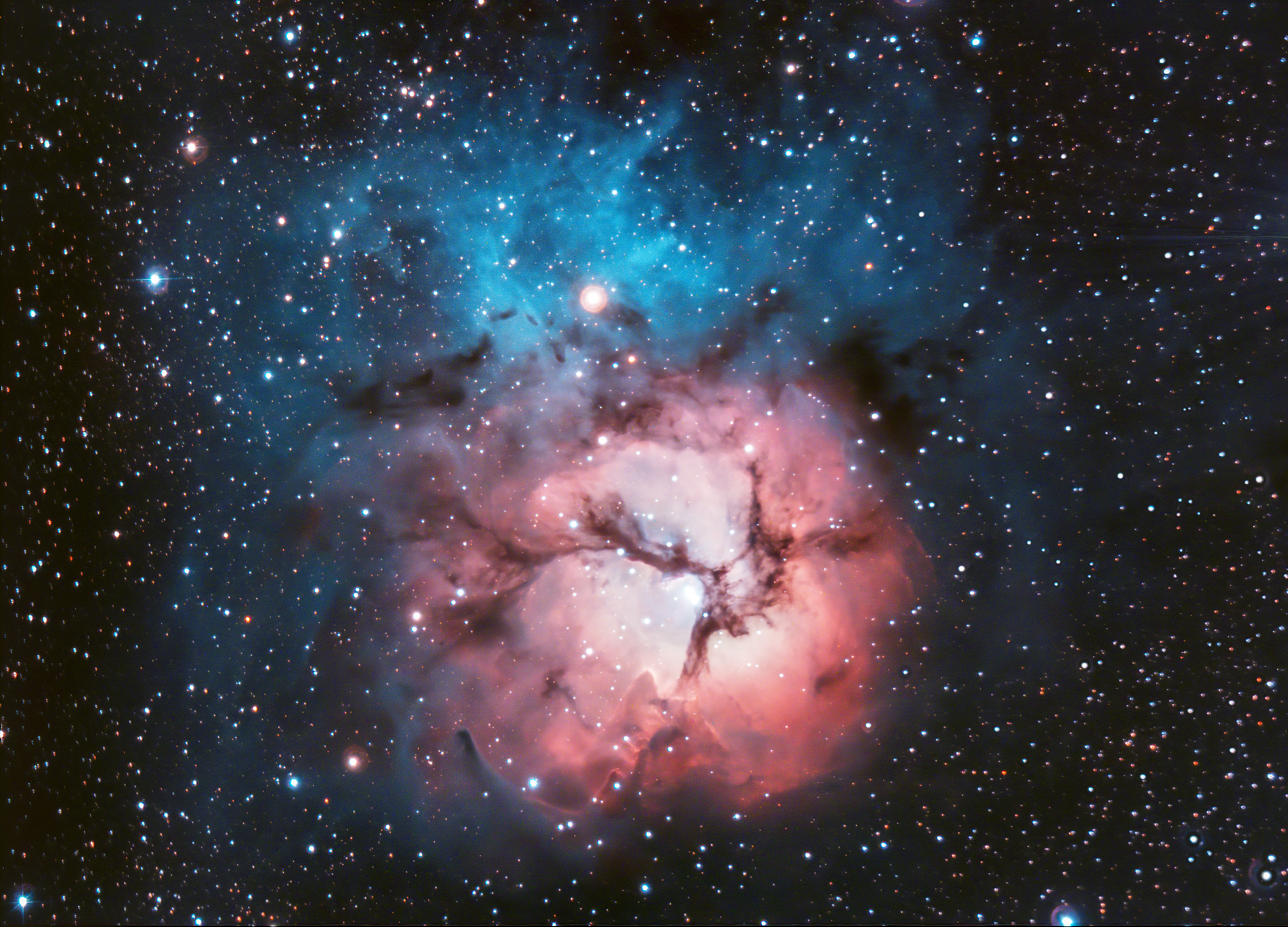
Nebulas, cosmic clouds made of gas and dust, are often referred to as star factories. Though there is nothing to grasp, these interstellar regions often give birth to stars.
Ask any writer, and she’ll tell you that stories, too, take birth in the nebulas of the mind. To begin with, there is nothing but gas and dust – vague notions, fuzzy images, or perhaps a few fleeting ideas.
And that makes writing a story’s first draft tricky. It’s like moulding air into shapes. There’s nothing to grasp!
But there’s a way to take the pressure off. What if we thought of the first draft as a process to arrive at a ‘real’ problem? All you’re doing is adding water to the dust cloud, and your only aim is to end up with a wet lump of clay.
It’s not much, but at least you can touch and feel it. And then, you can spin it on the potter’s wheel to create shapely stories.
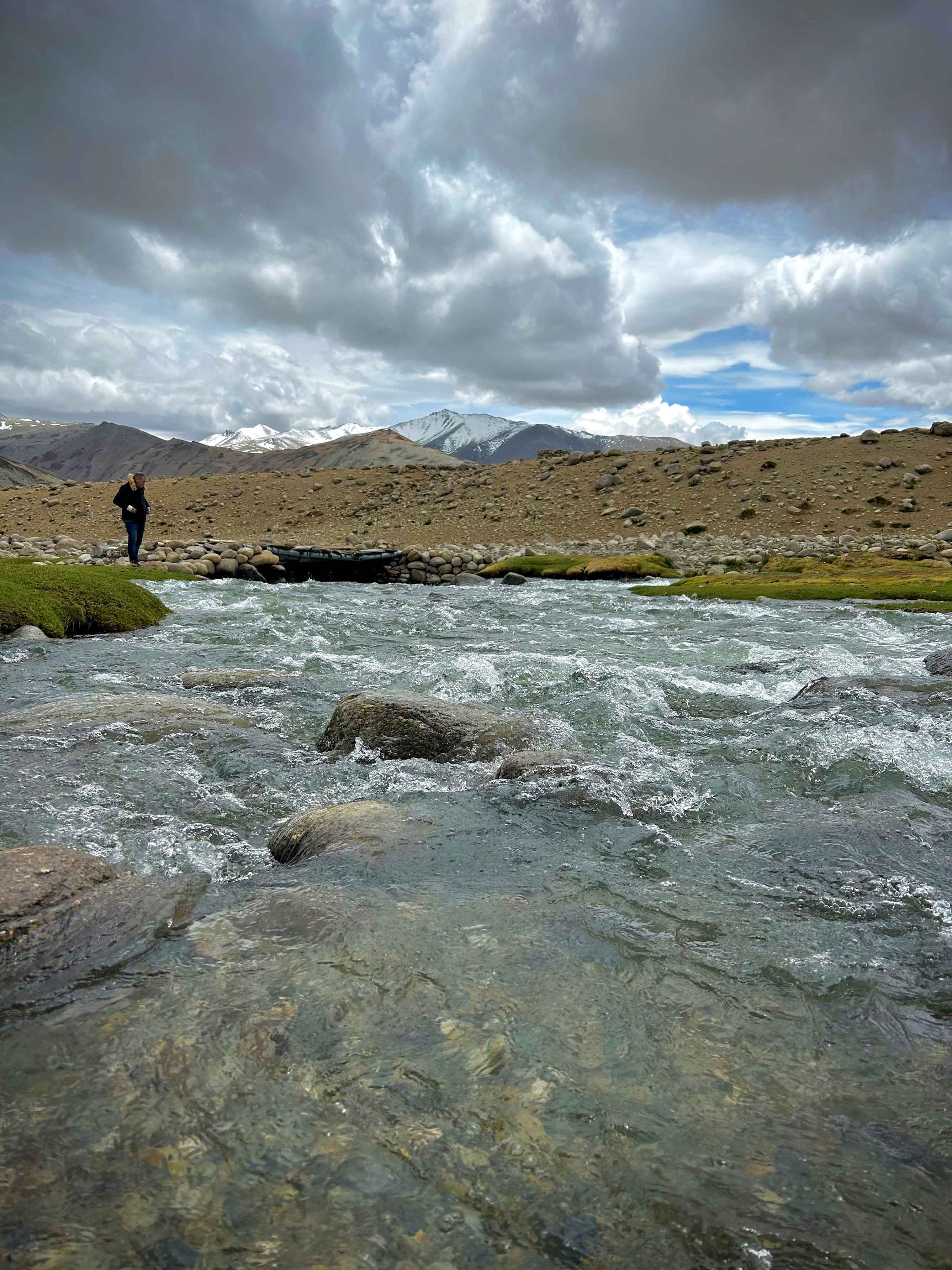
Glaciers melt into scurrying streams Clouds rest in the folds of mountains Cows graze just below, on the slopes Delighting in the soft grass, Garnished with early morning mist And the Earth turns
Choose a project and think about what the perfect outcome would be.
For example, if I am writing a novel, the perfect outcome would be a story with complex characters, delicious conflict, engaging dialogues, a plot with twists and turns, and an ending that ties it all up.
Perfectionism wanted all this done yesterday. That’s why it is like the world’s worst client.
Healthy Striving, on the other hand, is like the world’s best client – or at least a very good client. It’s about acknowledging the goal but also that there is a process to get there. It’s about knowing that the first draft is just that – the first draft. Instead of saying, “this doesn’t work,” it’s about figuring out why it doesn’t work and then brainstorming possible solutions.
So, may be don’t be your own worst enemy – I mean, client.