Category: Monk In Progress

  • How to keep your feet dry while walking in the rain

    How to keep your feet dry while walking in the rain

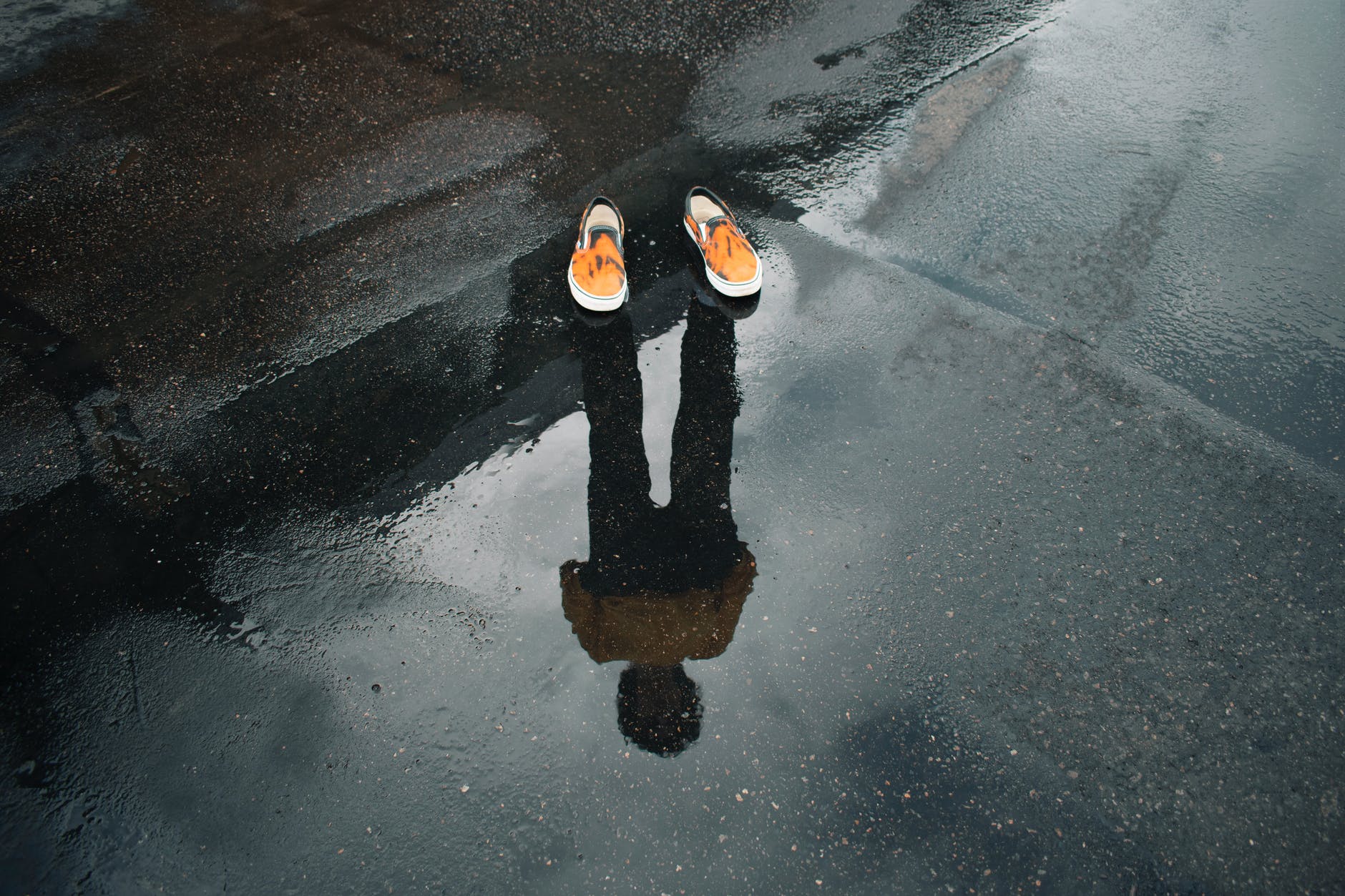
    I like walking in the rain, but I don’t like getting my feet wet. And if they do get wet, I don’t want them to stay wet.

    There are two things I can do: 

    1. Wear waterproof shoes that don’t let the water come in – but only as long as I don’t stay out too long. I also worry about my ankles, lest the water seeps in. Because once the water goes into a waterproof shoe, it stays wet for a long time. My skin goes wrinkly and red. And the shoe can’t be used until it dries from the inside.
    2. Wear a pair of shoes that invites the water in and lets it flow out quickly. I am no longer worried about keeping my feet dry. That battle is already lost. So, I walk at ease – not minding the grime because I can clean it off in a clean puddle. When I reach home, I wash my feet and pat them dry. I keep the shoes under the fan, and they dry in just a few hours.

    Turns out the best way to keep your feet (and shoes) dry in the rain is to let the water in.

  • Why I aim to be ‘better’ and not the ‘best’

    We want to be the best. Aiming to be the best is considered a worthy pursuit in the society. I did too.

    But I recently changed my mind because I am trying to evaluate every thought by a simple yardstick: Does this line of thinking take me towards action?

    ‘Best’ is a binary label. You are either the best or you are not. When you struggle – and all creative pursuits involve struggle – it’s difficult to believe that what you’re creating is the ‘best’. This is the easiest way to lose motivation. Pretty soon I’m logged on to Netflix simply because whatever effort I’m putting in, isn’t producing the ‘best’ results. So, pursuing the best, takes me away from the very things I need to move forward.

    Instead, I try to be ‘better’. The cool thing about becoming better is that I can be better in different ways. I can be better to different degrees. Even if I didn’t produce as many words today as I did yesterday, I am still in a better place today because the story has moved forward just that little bit.

    Trying to become better allows me to put in the work.

    So, I aim to be better, not the best.

  • Using time

    Using time

    Today’s Sunday. It’s a rare day when I have time. I immediately started thinking about what I could do with this time.

    That’s the funny thing about time. The moment I notice I have it, I start thinking about how I can spend it.

    The moment I start thinking about how I can spend it, I start thinking about how I can spend it well.

    The moment I start thinking about how I spend my time well, I get anxious. Is there a better way to spend time? Just as there is always a better dress, a better partner, a better restaurant, there is a better way to spend time. This is especially true for those of us who are pursuing a creative calling seriously. After all, the time spent not earning money is the time we have to build our creative portfolio.

    So, not having time brings discomfort. Having time brings discomfort too.

    Accepting this discomfort is key to living a satisfying life.

    Here’s what I am attempting. I give up trying to save time or do more with my time. Instead, I focus on just one thing I can or have to do in the present.

    I’m finding that this doesn’t stem the discomfort that’s inherent to life, but it might just be the path of living a satisfying life.

  • A gentler question

    A gentler question

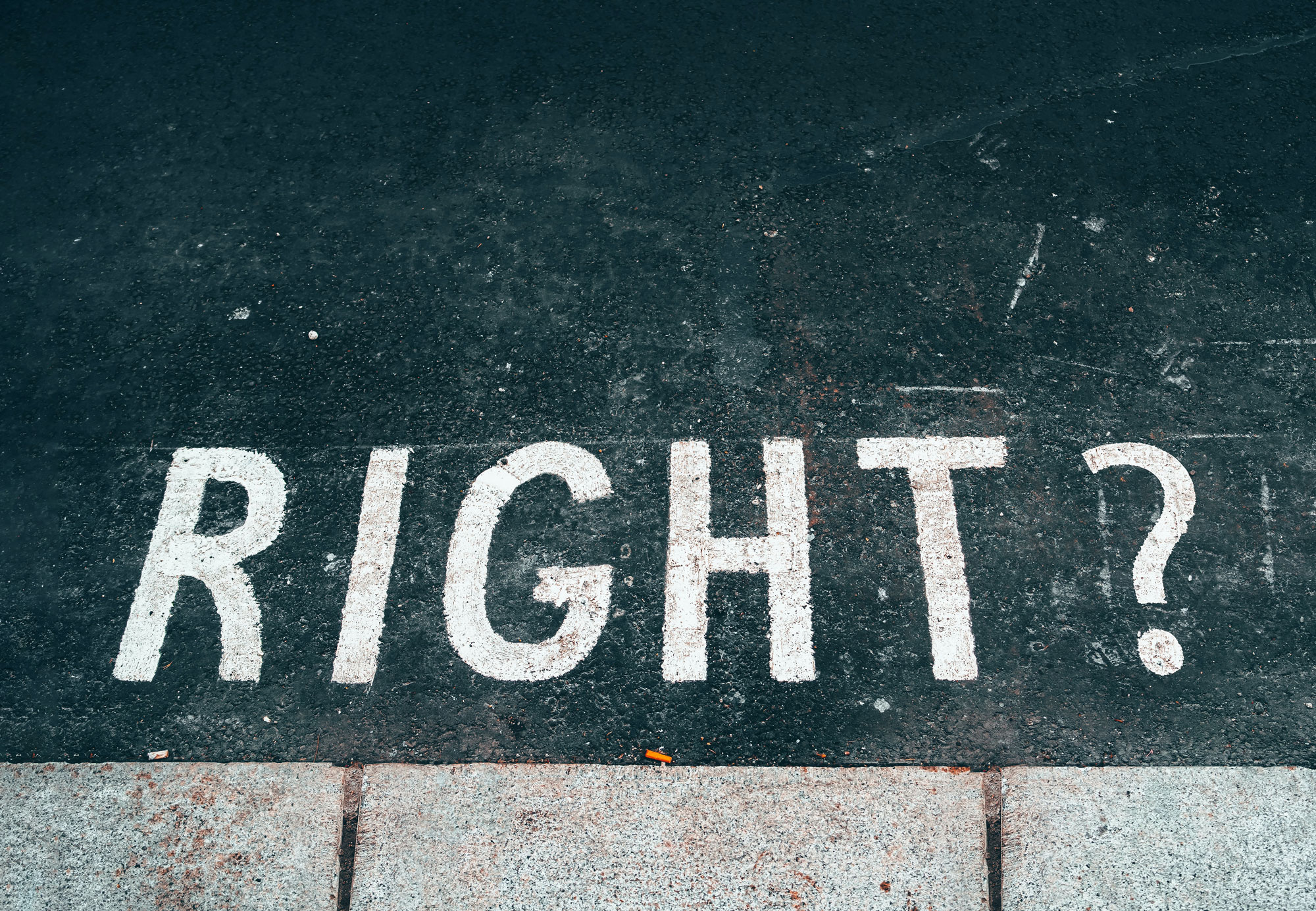
    We spend a fair amount of time obsessing over right vs wrong. However, the words ‘right’ and ‘wrong’ have a binary quality. While there are many situations where this serves us and society well, there as many – if not more – situations that defy such easy categorisation. 

    Now, this is not a post on morality. Here, I wish to address the more mundane topic of decision making. How do we decide on a course of action when we are not sure if it is the right or wrong one? Or, what if we know what is the right action, but don’t feel like taking it?

    Let’s say it is 7 am on a Monday morning. You’ve just woken up. There are emails to be checked, meetings coming up, and you are reminded of the status reports to be filed by the end of the day. It occurs to you that you should take 10 minutes to meditate. But the rush, the anticipation of the hectic day to come, is distracting you. You itch to open your laptop instead.

    Let’s pause. The ‘right vs wrong’ framework serves us poorly here. There is nothing ‘wrong’ with skipping meditation. If we do, we are likely to enter a spiral of thinking – blaming ourselves for, well, wanting to do the wrong things.

    In such ‘grey’ situations, I find it is more helpful to ask a gentler question: Is this action helpful?

    Meditation is a step towards a balanced state of mind. Checking email as soon as you wake up is likely a step towards imbalance. This question reduces the emotional stakes that ‘right vs wrong’ brings with it. With the stakes lowered, I find my mind moving towards balance – and more likely to make a decision that is helpful. 

    Now, obviously, things don’t tie up neatly like a bow every time. Despite the gentler question, I may well choose the option that is unhelpful. And no, it does not make me feel good. But by lowering the stakes, I give myself a better shot at reaching and staying in a balanced state of mind. 

    A state of mind that hopefully takes more right decisions than wrong. 

    If you liked this post, you can subscribe to my weekly newsletter with the best post(s) on leading a Calm, Creative, and Curious life.
  • The river of time

    The river of time

    Hey
    Come here
    Sit
    Breathe
    Watch the chatter
    Be very very still
    Listen
    The gentle gurgle
    It’s the river of time
    Flowing by

    I’m not sure if this qualifies as poetry. Just some thoughts that occurred to me as I craved silence.

  • Let the spiders be

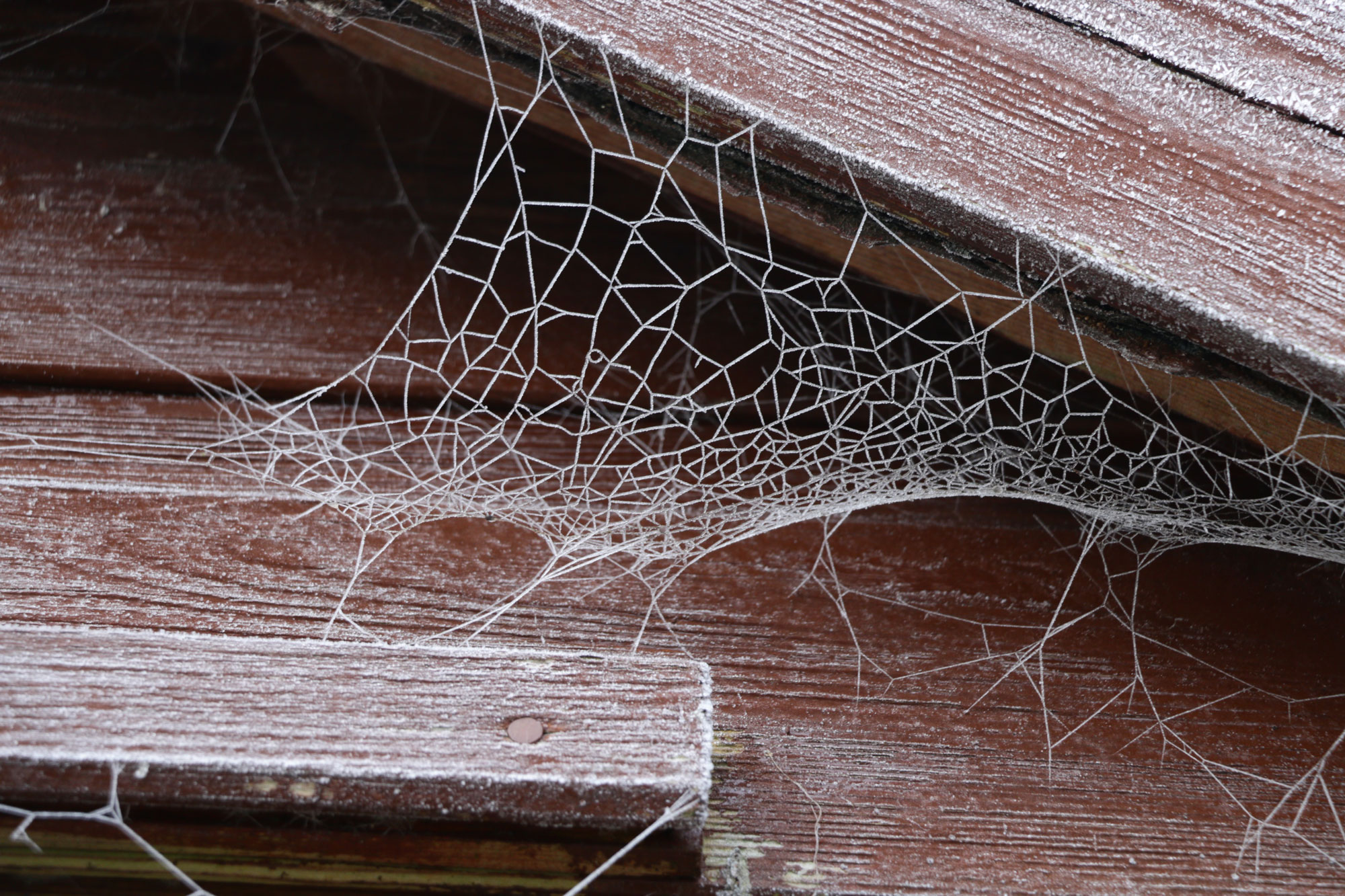
    Let the spiders be

    Human beings have developed strange obsessions over the course of their evolution: Little pieces of paper, which are kept safely near the bum, light-emitting slabs of glass and plastic, and Taylor Swift. 

    One such obsession is with order and cleanliness. This is partly due to the fact that we have built ourselves tiny roofs and walls rather than live under the open sky. And so, we spend a small but not insignificant amount of time dusting and organising. We clear out cobwebs with extra gusto — ‘Damn those six-legged critters’. 

    For a long time, I used to do the same. Ants around the house were given the marching orders, cobwebs were introduced to the broom, and cockroaches were swiftly assassinated! 

    But at some point, I started thinking about how I could avoid the pests from coming into my home rather than killing them after.

    I started questioning how much harm the beings we deem to be ‘pests’ actually cause us.

    For instance, I avoid tempting the ants by clearing out sugar fallen on the kitchen platform immediately. If the ants do arrive, I let them carry out their operations as long as they don’t interfere with what I am doing. (They are usually very efficient about it.) 

    I felt vindicated when I read an essay by the poet Mary Oliver. In the essay, Oliver recalls her time in a rented house where she found a spider’s web under the staircase. Oliver’s power of observation and articulation is on full display as she describes the spider’s behaviour — from the trapping of a cricket to the laying of eggs. 

    But at one point, Oliver has to vacate the house. The owners, she knows, will clear out the spiders. In fact, Oliver herself has hired a  crew to clean the house before handing it over to the owners. She considers moving the spider to a safer place. 

    Finally, I did nothing. I simply was not able to risk wrecking her world, and I could see no possible way I could move the whole kingdom. So I left her with the only thing I could—the certainty of a little more time. For our explicit and stern instructions to the cleaners were to scrub the house—but to stay out of this stairwell altogether.

    But the line that stood out for me in the essay was this:

    How do spiders know what they know? 

    When we casually kill an insect that does us no objective harm except disturbing our sense of order, are we aware that we are killing a being with knowledge? Who was born and strives to survive in this world as much as we do. Whose home this good earth is as much as our own. 

    I am not trying to judge anyone morally. I am sure more insects will die at my hands — certainly those that cause me harm and those that don’t. I am instead saying that we become more aware of our actions. 

    Meanwhile, there are multiple spider webs on the plants on my window. My hands itch to clear them with a broom. But I control my instincts. Like Oliver, I give the spiders the “certainty of a bit more time”. 

    If you liked this post, you can subscribe to my weekly newsletter with the best post(s) on leading a Calm, Creative, and Curious life.
  • You will have regrets. And that’s okay

    You will have regrets. And that’s okay

    Fear comes in all kinds of flavours. One flavour that plays an important part in our lives – or at least in my life – is the fear of having regrets. We try our best to avoid making choices that we will regret later in life.

    This makes sense. An executive who works weekends misses out on time spent with friends and family. Closer to or after retirement this individual may feel regret – because there are no more deadlines to pursue and your neglected relationships lie in a ditch. 

    Now, let’s come back to the present. Our executive is, say, 35. Why is he working all the time? Perhaps his priority is to earn a lot of money because he is desperate to have financial security. Maybe he is really good at his job and wants to grow creatively and financially.

    In order to avoid regrets, this guy decides to take his weekends off to spend more time with his family. This choice does mean he won’t get enough work done. It might slow his career growth. Now, there is fear that he might regret not pushing himself enough to fulfill his potential.

    In the present moment, either choice might lead to regret later in life.

    Afraid of this our man pushes himself hard during the week. He tries to do well at work, spend time with family, nurture his hobbies, manage a side-hustle, and show up at the gym to maintain his fitness. Do you see where I am going with this?

    Without the acceptance that there are some things we simply won’t be able to accommodate in our limited lives, every choice will lead to regret. We can cultivate this acceptance by first making space for some regrets in our lives. We don’t try to do it all. We prioritise.

    Regrets indicate that we have lived a life where we made choices. And that the self who is making choices is imperfect (and it’s okay if he is imperfect). That he has simply made the best possible choice as per his current understanding of life.

  • Is meditation meant to lull you to sleep?

    Is meditation meant to lull you to sleep?

    Meditation has become somewhat of a buzz word in recent years, aided in no small part by the proliferation of apps that offer guided meditations. As more people get introduced to meditation via these apps, the understanding and misunderstanding around the practice appears to be growing.

    Some meditation teachers are concerned that the apps offer a limited or skewed understanding of meditation. A case in point: Many apps offer guided meditations to be done at bedtime that can help people get a good night’s sleep.

    I visited the App Store listing pages of Calm and Headspace – two of the most popular meditation apps. The pages have featured images where developers communicate their apps’s best features to users.

    On Calm, the second featured image reads, ‘Sleep more. Stress less. Live better.’ Ditto Headspace, whose second featured image says, ‘Sleep soundly. Stress less.’ Clearly, these apps are presenting a good night’s sleep as a key value proposition to potential users.

    There is nothing wrong in presenting or following the apps’s ‘bedtime’ offerings. But according to me they are not meditation practices. They are relaxation techniques.

    (Note: I do not claim to be a meditation master. My understanding is based on my own practice, reading books, and listening to talks by meditation masters such as Sam Harris, Mingyur Rinpoche, Jack Kornfield, Diana Winston and Tara Brach.)

    The purpose of relaxation techniques is to, well, relax your mind and body.

    On the other hand, the purpose of meditation practices – and yes, there are multiple practices – is to develop a clarity in understanding the nature of reality.

    A good way to achieve this is to develop a better understanding of our minds and hearts. We must also understand the nature of suffering. In the process, we feel calmer and more grounded. These are all positive emotions – but none are meant to lull you to sleep.

    I want to clarify that I find relaxation techniques extremely useful in my own life. However, what I do want to point out is that the scope of meditation practices is much wider.